Article: How to Clean Brass: Unlacquered Brass Care and Patina
How to Clean Brass: Unlacquered Brass Care and Patina
Unlacquered brass is having a moment in kitchens, bathrooms and entryways, and for good reason: it's a living finish. Because it has no protective coating, it reacts with air, moisture and the oils from your hands, and slowly develops a warm, darker patina.
What "unlacquered" means
Most brass you see in stores is lacquered: a clear coating seals the surface so it stays the same color. Unlacquered brass is left raw. It arrives bright and starts to change from the first weeks, faster where you touch it most.
How the patina develops
- First weeks: the bright yellow softens slightly.
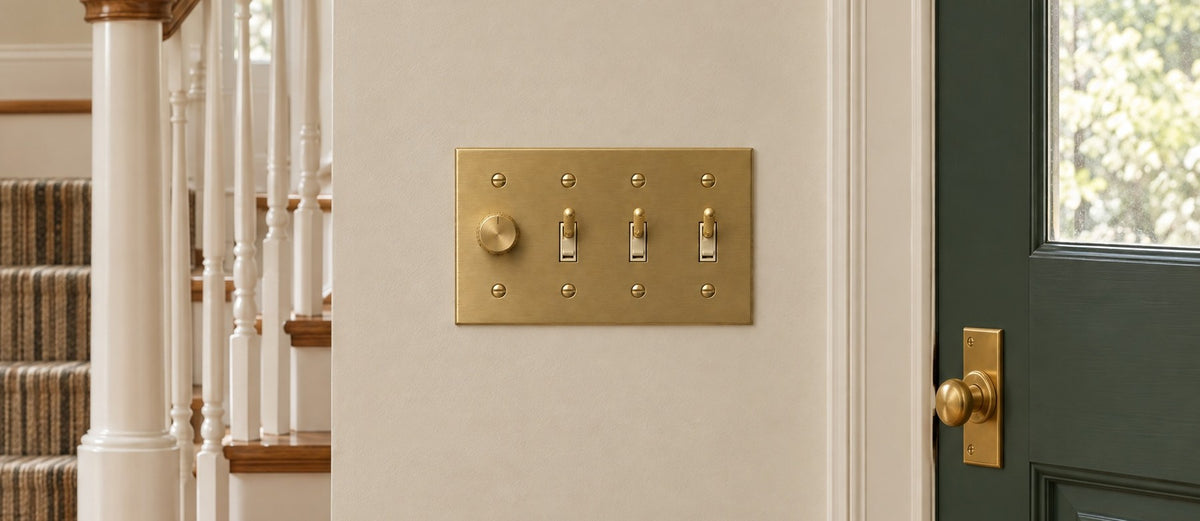
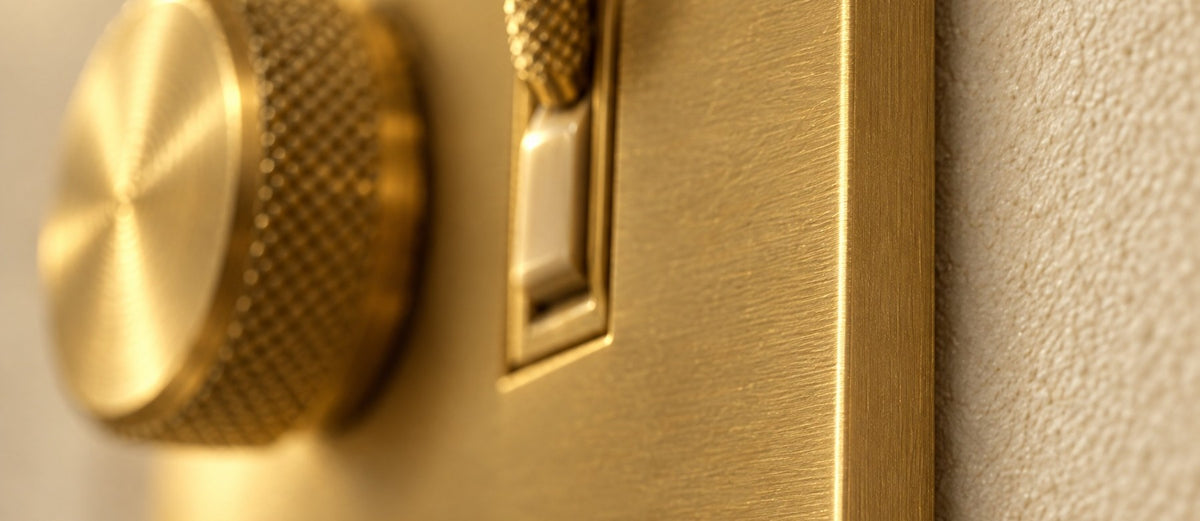
- First months: the areas you touch most, like a switch lever or a dimmer knob, darken faster than the rest of the plate.
- Over time: the whole surface takes on a deeper, browner tone, uneven in a natural way.
Humidity, cooking and salty air speed it up. That's why unlacquered brass in a bathroom or a kitchen ages faster than in a hallway.
Option 1: let it age
The simplest care is no care: dust it with a soft dry cloth now and then and let the patina build. Many people choose unlacquered brass exactly for this.
How to clean brass (and when not to)
To clean brass, wash it with warm water and a drop of mild dish soap, rinse, and dry it completely with a soft cloth. That removes fingerprints and grime without touching the patina. To remove tarnish and bring back the shine, use a brass polish or a paste of lemon juice and baking soda, rub gently with a soft cloth, then rinse and dry. Before you do either, find out what kind of brass you have, because the right method depends on the finish.
First, check the finish
| Finish | How to recognize it | How to clean it |
|---|---|---|
| Lacquered brass | Stays the same color for years; tarnish only appears where the coating is worn | Soap and water only. Polish strips the lacquer and leaves blotchy patches |
| Unlacquered brass | Darkens over time, faster where it's touched | Soap and water to keep the patina; polish only if you want it bright again |
| Aged brass | Darker, antique tone from day one | Dry or damp cloth. Polishing lifts the darker tone and exposes bright brass |
| Satin brass | Soft brushed texture, even color | Damp cloth, wiped in the direction of the brushing |
How to clean tarnished brass, step by step
- Turn off the power at the breaker if you're cleaning a switch, or better, unscrew the plate and clean it off the wall.
- Wash off dust and grease with warm soapy water and dry it.
- Apply a brass cleaner, or a paste of lemon juice and baking soda, with a soft cloth.
- Rub gently with the grain, rinse with a damp cloth and dry completely.
- Never use abrasive pads, steel wool or harsh chemicals, and never spray liquid onto a switch or into the wall box.
When not to clean brass
If you chose unlacquered brass for the way it ages, you don't need to polish it at all. Polishing resets the clock: the patina that took months to build is gone in a few minutes. Dusting with a soft dry cloth is enough. The same goes for aged brass: a wipe is all it needs.
You can also polish just the high points and leave patina in the recesses for an antique look.
Unlacquered vs aged vs satin brass
- Unlacquered brass: bright at first, darkens with time and touch.
- Aged brass: a darker, antique tone from day one, made for old houses and warm interiors.
- Satin brass: a soft brushed finish that stays more even.
Oxide makes every switch and plate in all three finishes, so you can choose the one that matches your faucet and hardware, or order the finish sample set to compare them in your own light.
- Unlacquered brass light switches
- Aged brass light switches
- Satin brass light switches
- 4-gang dimmer switch, 2 dimmers + 2 toggles, in all three finishes
- 2-gang brass dimmer switch
FAQ
Does unlacquered brass tarnish?
Yes, that's the point: it develops a patina over time. It can be polished back to bright whenever you want.
Is unlacquered brass good for a kitchen or bathroom?
Yes, if you like a finish that changes. It will age faster there because of humidity and frequent touch.
How do I clean unlacquered brass without removing the patina?
Wipe it with a soft dry or slightly damp cloth and dry it. Avoid polishes, which remove patina.
How do you clean brass hardware like switch plates?
Remove the plate from the wall, wash it with warm soapy water and dry it. If it's unlacquered and you want it bright again, use a brass polish or a lemon juice and baking soda paste, then rinse and dry before you screw it back on.